
Loading…
ngnsimulation is now in active pilots with Alberta nursing & HCA programs.Request a pilot
CST exam pass rate for 2025 was 68.6% on the first attempt. What the figure measures, how it differs from the ARC/STSA 70% threshold, and what programs can act on.
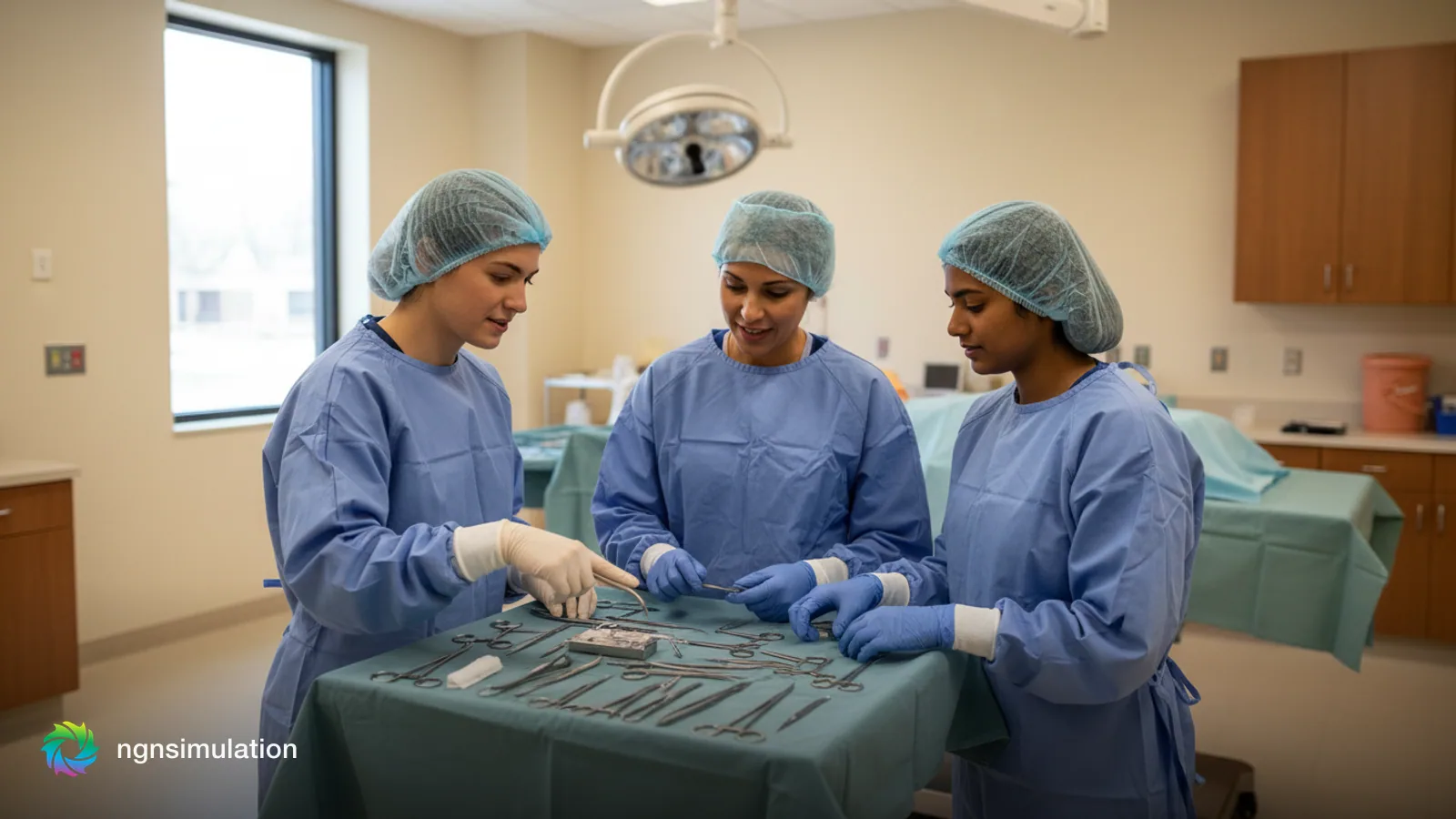
The CST exam pass rate is the first number most surgical technology program directors look at each year, and the 2025 figure is lower than the year before. The National Board of Surgical Technology and Surgical Assisting (NBSTSA) reports that 68.6% of first-time candidates passed the Certified Surgical Technologist (CST) examination in 2025, down from 71.8% in 2024. This article sets out what that number measures, how it differs from the outcomes threshold accredited programs report against, and what a program can reasonably do with it.
NBSTSA publishes a short table of certification data each year. For the CST examination it lists the total number of examinees, the number sitting for the first time, and the national first-take pass rate.
| Year | Total examinees | First-time examinees | National first-take pass rate |
|---|---|---|---|
| 2025 | 12,117 | 11,931 | 68.6% |
| 2024 | 10,948 | 9,823 | 71.8% |
| 2023 | 10,579 | 9,580 | 69.1% |
| 2022 | 9,993 | 6,623 | 70.0% |
Two things stand out. First-time volume rose from 9,823 in 2024 to 11,931 in 2025. Over the same period the first-take pass rate fell by 3.2 percentage points. The table does not explain the change, and this article does not guess at a cause. The four years shown move within a narrow band, between 68.6% and 71.8%.
The Accreditation Review Council on Education in Surgical Technology and Surgical Assisting (ARC/STSA) reviews surgical technology programs for accreditation by CAAHEP. Its Standards require a program to meet the established outcomes thresholds, and the numbers themselves are set out in a separate document, the Outcomes Threshold, Reporting and Assessment Policy.
For the outcomes assessment examination, that policy states a 70% pass rate and a 100% participation rate for surgical technology programs. It says programs must report the total number of students graduating and the number who passed the CST examination on the first attempt, and that thresholds are reported for cohorts completing within the ARC/STSA reporting year, August 1 to July 31. The policy describes these thresholds as the minimum criteria to maintain compliance with the Standard.
It is tempting to read 68.6% against 70% and conclude that the average program is below threshold. The sources do not support that reading, for three reasons.
What the national figure does tell a program is the level of difficulty its graduates are meeting. When roughly three in ten first-time candidates nationally do not pass, a program sitting close to 70% has little margin, and a small cohort can move several points on the result of one or two students.
Neither source prescribes a remedy, so what follows is practical reasoning and not a finding from NBSTSA or ARC/STSA. Because the threshold counts first-attempt passes against the graduating cohort with full participation, three things matter more than they would under a looser measure.
In practice that points toward regular low-stakes practice tied to the examination content outline, a record of what each student has practised and missed, and time in the schedule to act on it. How a program provides that is its own decision. The requirement to assess and report outcomes is the part the Standards fix.
The NBSTSA table gives no breakdown by program type, state or delivery model, and no reason for the 2025 change. The ARC/STSA policy sets the threshold and the reporting year but does not publish how many programs met it. Any claim about which kinds of programs are struggling, or why, would go beyond what these two documents show. Program directors should read both documents directly, since each is short and both are linked below.
ngnsimulation provides unscripted AI patient encounters inside an EHR-style chart, spoken practice stations, adaptive study and quizzing with a placement check, and faculty-facing competency data, alongside an existing LMS. Surgical technology is one of the professions it covers. Programs can see how it works at how it works or ask about a pilot at the pilot process.
Next step
Everything we write about is built into products you can try today.